
Social Media Content for Wineries: Strategy Matters
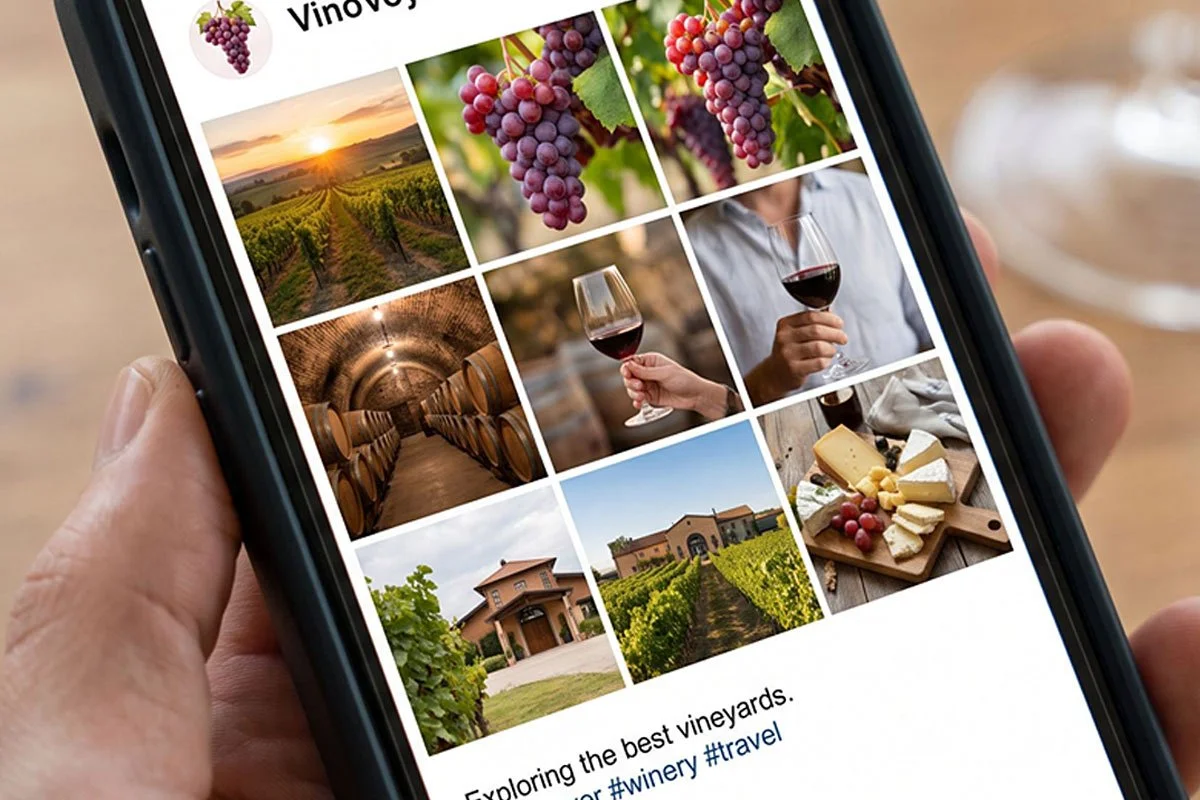
Algorithms may change frequently, but your brand voice shouldn't
Every few months there's a new trend, format, or platform quirk that promises to enhance your social media performance. We’ve seen them all: a trending audio clip, a particular posting time, a reel format everyone's suddenly using, and so on. Experimenting with these tactics to improve your performance is one thing, but doing it without a strategy risks expending a lot of additional effort that might not increase follower activity or brand recognition.
The wineries whose social media genuinely works (“works” being relative to your strategy for a channel) aren't the ones best at spotting trends, they're the ones with a clear content plan that’s rooted in a real brand voice. That way, when you want to test the merits of a new trend or feature, you’re doing it in a way that fits (and can further) your brand objectives.
Why Socal Media Platform Tactics Alone Won't Build a Following
Individual posts built around trends can generate a short spike of engagement, but engagement isn't the same as brand-building.
A trending format might get more video views, but if the caption, tone, and content don't sound like the rest of your brand, it doesn't actually deepen anyone's relationship with you — it just briefly borrows someone's attention. Wineries that build a genuinely engaged following are consistent enough, over time, that a follower will recognize a post as theirs (even without seeing their name attached).
That level of consistency doesn't come from mastering a platform's algorithm. It comes from a clear sense of what you sound like and what you're actually trying to say, applied post after post, regardless of which trend is currently popular.
What a Real Social Content Plan Looks Like
A good social media strategy starts with the same foundation as everything else in content marketing — your UVP and brand voice — and then translates that into a practical, sustainable plan. A lot places will post randomly or without a plan, but having a plan in place makes things much sharper for your content marketing strategy and make the analytics a lot more valuable.
Consider the following:
A clear sense of who each platform is actually for. Instagram, TikTok, Facebook, and other platforms serve different segments of your audience in different ways. Your plan should reflect that, and not just post identical content everywhere by default.
Work from content pillars, not a fresh start each week. A small set of recurring themes (behind-the-scenes, winemaking, guest moments, wine education, seasonal updates) gives you a sustainable structure instead of scrambling for ideas to post.
A realistic, sustainable cadence. Posting consistently matters more than posting a lot. Sticking to a modest posting schedule outperforms an ambitious one that slows down (or stops) after a few weeks (because you ran out of steam or ideas).
Your captions in your brand voice. Don’t try to be something you’re not, or try to mimic another account on any given social media platform. Be genuine and that will resonate.
Clear visual direction. Part of your content marketing strategy is your visual style. So be sure that whoever is shooting or sourcing images (whether that’s you, a staff member, or a photographe) knows what the content is meant to communicate, in addition to what it should look like.

Strategy First, Execution Second
Here's where this connects directly to the writing-first principle running through all of my posts on content marketing: a social media content plan is, at its core, a writing exercise before it's a visual one. Deciding what to say, in what voice, on what recurring themes, is what makes the difference between a scattered feed and one that actually reinforces your brand every time someone scrolls past it.
This is also where I position my own role clearly when I am hired to do a job. I develop the content plan or style (the pillars, the calendar, the captions, and the visual direction) and can produce the copy and much of the photography directly. For execution that requires more specialized visual production, like elaborate video content or high-end photography, I'll coordinate with your existing team or bring in a collaborator — while continuing to own the strategy and voice behind what gets posted. The plan is the valuable, differentiating part. The execution can flex depending on your team's existing capabilities.
A Note on Consistency Across Platforms
Social media doesn't exist in isolation from the rest of your content.
A caption that sounds nothing like your blog, or a tone that contradicts your website copy, creates the same brand fragmentation problem that I cover in posts about brand and UVP. It's a relatively common failure point when social media is handled by a different person, agency, or process than the rest of a winery's content, with no shared brief connecting them.
Treating social content as one piece of a single content system, rather than its own disconnected channel, is what keeps a follower's experience of your brand consistent, whether they're reading a blog post, browsing your website, scrolling your feed, or visiting your winery in person.
See more posts about content marketing for wineries.
Mike Belobradic is a winery and tourism marketing consultant with 30 years of executive marketing and brand leadership experience in HNW wealth management and luxury travel. He holds WSET wine and spirits credentials, has formal culinary training, and is a KCBS-certified barbecue judge.
FAQ
How often should a winery post on social media?
A modest, consistent cadence that you can sustain long-term outperforms an ambitious schedule that collapses after a few weeks. The right frequency depends on your team's capacity more than any universal rule. Once or twice a week is a good place to start if you’re new to this, or have limited resources.
Do I need a different strategy for each social platform?
The underlying brand voice should stay consistent, but content often needs to be adapted for how each platform is actually used and by whom. Posting identical content everywhere is rarely the most effective approach and can come across as lazy.
Can you handle the actual posting and community management, or just the strategy and content?
I develop the content plan, copy, and visual direction, and can produce much of the photography directly if need be. Day-to-day posting and community management can be handled by your team or coordinated as part of a broader engagement, depending on what you need.
What if our current social media doesn't match our website or blog in tone?
This is a common and fixable issue. It’s usually the result of social content being handled separately from everything else, without a shared brief. Bringing it under one strategy typically resolves it over time.