
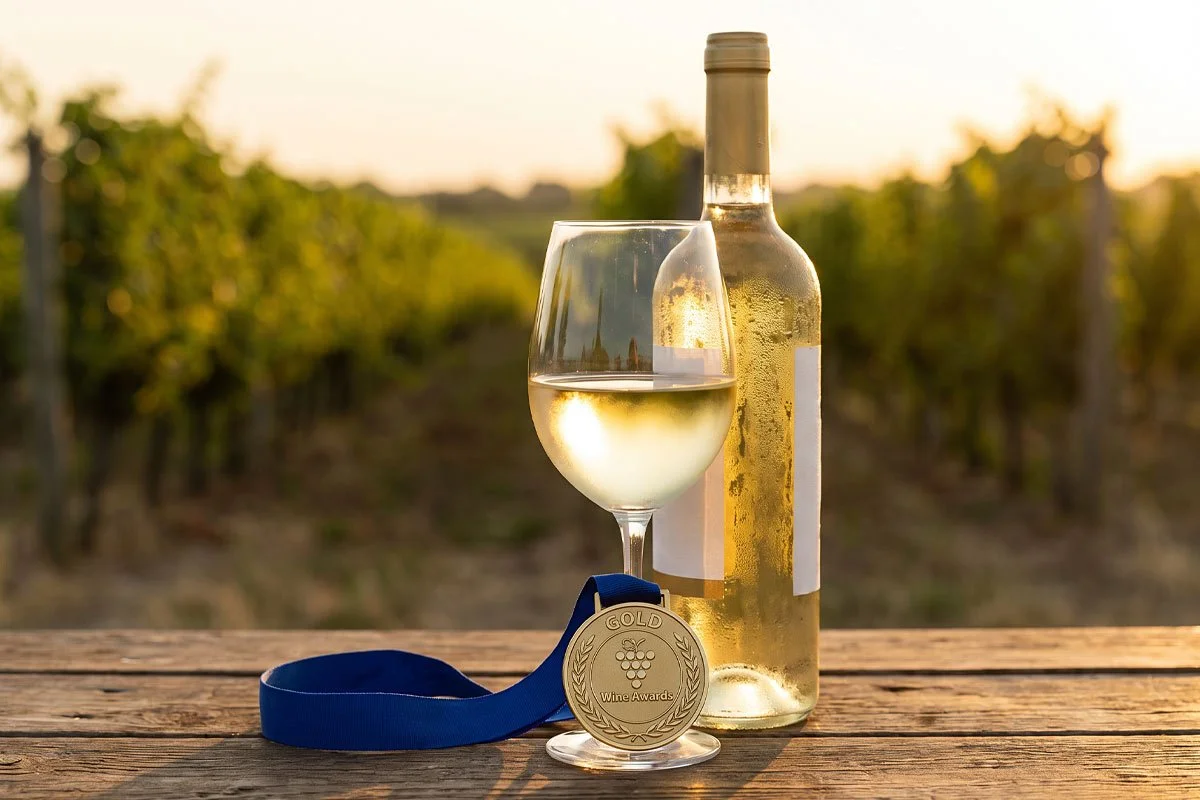
Customer reviews and awards aren't marketing collateral, they're proof your brand strategy actually works.
When it comes to a winery’s value proposition and brand strategy, who a winery has done its work for (the winery’s customers) is typically a list that includes winery guests, trade partners, and the consumer markets who buy its wines (outside of winery visits). Then there’s the question of what was the result of those interactions, which is the outcome that those relationships produced (repeat visits to the winery, award recognition, direct-to-consumer growth, trade placements, and similar things).
Together, these two questions (who a winery serves and what is the result of that) turn a winery's claims about itself into something closer to proof. Every winery has some sort of proof like this, but they may not see it as a strategic brand asset that needs to be activated.
This post is part of a series built around the seven questions behind building a real winery brand strategy, following posts on the cornerstone framework, brand identity, positioning, and process as proof.
Why these Two Questions Matter
Who you serve and what that results in are questions that might not seem very exciting, but they’re an important part of the value proposition and brand strategy development process. Other areas that I have covered (identity, positioning, process) are basically about a winery describing itself. "Who have we done it for" and "what was the result" are different. They're not a winery's claim about its own value, they're actual evidence that the claim holds up in real life. A five-star review, a repeat visitor who comes back every year, a trade buyer who reorders after the first placement, a competition medal and so on — these all carry a different kind of credibility than anything a winery says about itself, because they weren't made up by the winery.
With social proof front and centre, that distinction matters more now than it used to. Guests and trade buyers can tell brand-authored claims a mile away, and they weigh third-party evidence more heavily. A winery that has real proof, but that doesn't organize it or leverage it, is basically wasting credibility by not using it.
What Counts as Brand Proof the a Winery Can Use in its Marketing?
The answer to this is probably broader than most wineries think:
Guest outcomes.
Repeat visitation rates, wine club retention, direct-to-consumer growth over time… these are all specific things and not general impressions of "guests seem happy." Specifics are good.
Reviews and testimonials.
Not just star ratings, but specific language that guests use to describe the experience (especially language that echoes or reinforces the winery's stated why).
Award and competition results.
Medals, ratings, and recognitions, contextualized rather than just listed (i.e. what the result actually demonstrates about the winery's approach).
Trade relationships.
Sommelier and restaurant placements, distributor partnerships, and how long those relationships have lasted.
Press and press-adjacent coverage.
Features, mentions, or citations from credible outlets or wine writers.
Most wineries can point to things in all five categories, which is great. But not as many have organized them in any way, and even less connect them back to the "why" and "how" that I cover in other posts in this series.
The Difference Between Collecting Proof and Using it Strategically
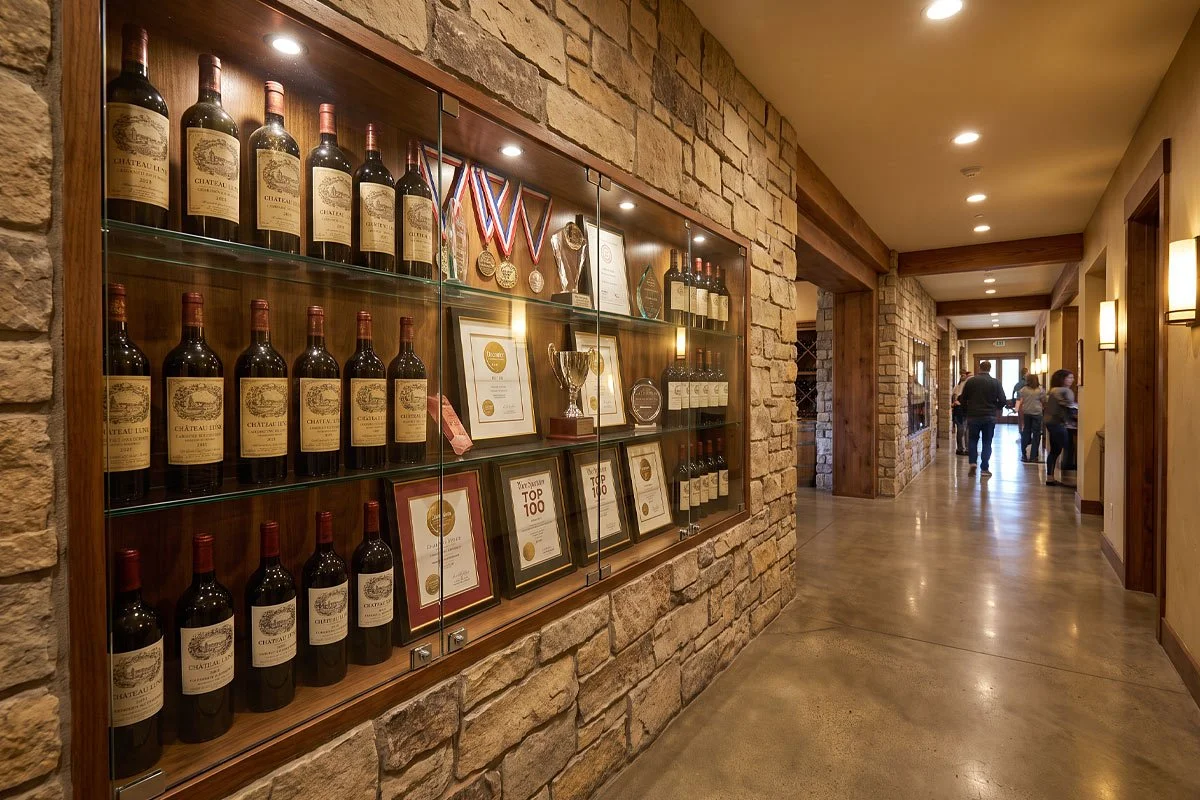
Collecting proof can sometimes be saved as a folder of screenshots of reviews, a shelf of medals in a tasting room, or a testimonials awards page on a website that nobody has updated in two years. But using proof strategically means finding the specific evidence that reinforces the specific claims made elsewhere in your marketing.
If a winery's "why" centres on minimal intervention winemaking, the proof that matters most is a sommelier's specific praise for the wine's expression of terroir, not a generic five-star rating. If the "how" is about unhurried, personalized hospitality, the proof that matters is a guest testimonial describing exactly that — not a review that only mentions the wine. Proof points aren't interchangeable. The strongest ones confirm the specific claims that the brand has already made.
Why Wineries Underuse their Own Proof
The pattern I see most often isn't a lack of proof, it's a lack of a system to activate those proof points.
Reviews accumulate on Google or a booking platform and never get pulled anywhere else. A trade relationship that's lasted eight years never gets mentioned publicly because nobody thought to talk about it. Awards and medals get displayed physically in the tasting room, but never make it into digital content where prospective guests and trade buyers would actually encounter them before making a decision.
This is a collection and curation problem. A lot of established wineries have more proof than they realize. What's usually missing is a deliberate process to gather it, match it back to the specific brand claims it supports, and activate it where it can actually do work (the website, sales materials, trade one-pagers, social content).
Building a Brand Strategy is a Collection of Many Things, Used Strategically
The next post in this series covers why a guest or trade buyer should do business with you specifically. It’s the synthesis point where the first six questions converge into an actual reason to choose your winery over the one down the road. If your winery has proof points that aren't currently working as hard as they could be, that's a common finding in the Marketing and Brand Audit.
Read more posts about winery brand strategy.
Mike Belobradic brings 30 years of executive marketing and brand leadership in HNW wealth management and luxury travel to winery and tourism brand strategy, backed by WSET wine and spirits credentials, formal culinary training, and standing as a KCBS-certified barbecue judge.
Frequently Asked Questions
Why do testimonials and awards count as brand strategy and not just marketing content?
Testimonials, awards, and guest outcomes are third-party evidence that a winery's claims about itself hold up in real life. Unlike a winery's own description of its identity or process, this proof was generated by someone else, which gives it a different kind of credibility. Treated strategically, it confirms specific brand claims rather than functioning as generic marketing material.
What kinds of results should a winery be tracking as proof points?
Guest outcomes like repeat visitation and wine club retention, specific language from reviews and testimonials, award and competition results with context, the length and depth of trade relationships, and press or wine-writer coverage. Most wineries have some evidence in each category but rarely track or organize it systematically.
How do I know which proof points to feature in our winery's marketing?
The strongest proof points are the ones that directly confirm the specific claims already established in your brand's identity, positioning, and process. Generic praise is weaker than proof that echoes your winery's actual stated why — for example, a sommelier's comment on terroir expression if your why centers on minimal intervention winemaking.
Why do wineries often have proof but not use it effectively?
Usually because the proof is scattered rather than systematically collected — reviews sit on a booking platform, award medals stay in the tasting room, long-standing trade relationships never get mentioned publicly. The gap is typically a lack of process for gathering and matching proof to specific brand claims, not a lack of proof itself.