
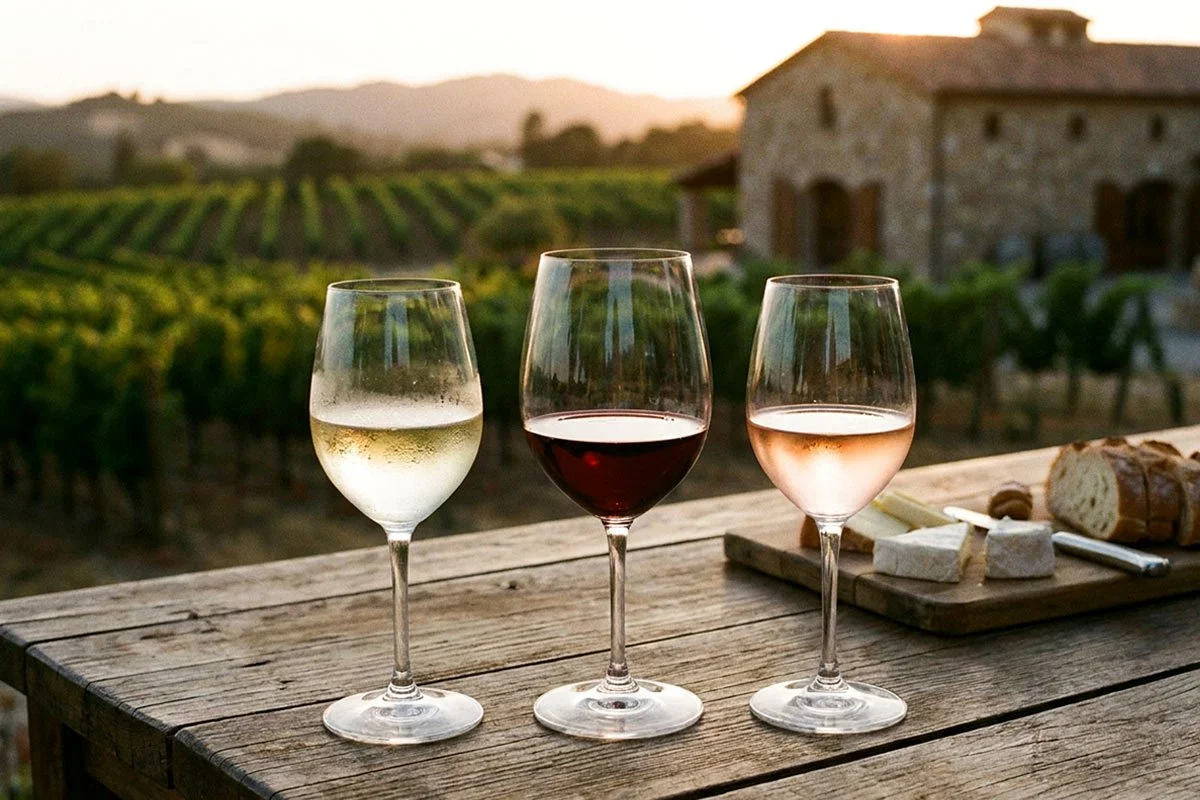
A region's wine is rarely the problem. It's almost always the story built around it (or lack thereof).
Regional wine tourism boards build real, lasting authority not by promoting more wineries or listing more tasting rooms, but by shifting away from informational marketing (event calendars, seasonal blog posts, economic impact stats) to narrative marketing. This shift in approach gives a traveler, a journalist, or an AI search engine an actual reason to choose or recommend this region over every other wine region competing for the same trip.
A lot of boards that I see are still doing the first. Some run token ads that lean into the second, but not many have truly mastered narrative marketing at the level their region's wine quality deserves.
A Well-Known Wine Region with an Underused Advantage
Take my POV on a well-known North American wine region as a sample illustration — not as a criticism, just as a pattern worth noticing. The industry infrastructure is genuinely strong: active growers and winery associations, an appellation authority, sustainability certification programs, government funding, and real momentum. The public-facing content from the local wine association, though, tends to follow a familiar format of seasonal posts around generic summer events, "sip, savour, and slow down" language, lists of wineries worth visiting, updates on advocacy wins, generic non-compelling TV ads and some talk of funding programs.
Regions need that kind infrastructure and advocacy for sure, but my sense here is that it’s mostly written for insiders — growers, government, industry stakeholders — not necessarily very motivating for the actual traveler (their market) who is deciding, right now, between this wine region and others on their shortlist.
And for AI search assistants like Chat GPT, Claude, CoPilot, Gemini and others (a good SEO, AEO and GEO strategy is a must), a growing number of travelers are asking AI to make that decision for them. A region can have outstanding wine, real sustainability credentials, and decades of winemaking history, and still lose that traveler to a region that simply tells a better story about itself and has a better digital footprint in place to capture those searches.
The Pattern that Shows up Almost Everywhere
These types of things aren't exclusive to any one region — it's close to the default posture for many wine tourism boards. The content mix that their marketing produces tends to skew heavily towards:
Seasonal and calendar-driven posts (harvest updates, festival announcements, random on-site events);
Economic impact and industry advocacy messaging aimed a bit more at government and members than travelers;
Winery listicles that read like a directory rather than a story; and
Generic destination language — "world-class," "award-winning," "beautiful" — that could describe almost any wine region on earth.
Every one of those has a legitimate purpose. But none of them, on their own, gives a traveler — or increasingly, an AI platform making recommendations to a traveler — a specific, ownable reason this region is the region, rather than a region. That's the gap. And it's a gap that shows up across the category. I don’t believe that it’s due to a lack of marketing talent or budget, but possibly because the muscle being trained (or the comfort zone for those doing it) is advocacy and information, not narrative and differentiation.
Why this Gap Matters More than it Used To
Two things have changed the stakes on getting this right:
Travelers increasingly compare wine regions the way they compare products — reading reviews, cross-referencing content, and now, more and more, asking AI to shortlist options for them. A region whose public content reads like a trade newsletter gives that traveler, and AI platforms, very little to work with.
Wine tourism has become genuinely competitive on a global scale — a region isn't just competing with the one next door anymore, it's competing with every wine destination a traveler has ever seen that photographed well.
A region sitting on real advantages — award-winning wine, strong sustainability credentials, a distinctive appellation identity, and a wide range of activities in the area — but marketing itself with generic content, is quietly losing ground it shouldn't have to lose.
The wine is doing its job. The storytellers are not.
What Separates the Boards that are Closing this Gap from those that aren’t?
The regional wine and tourism boards actually pulling ahead aren't necessarily spending more money on marketing, they're spending differently. They've stopped treating "come visit our wineries" as the message and started treating it as the outcome of a much more specific story: what makes this appellation's terroir genuinely different, what the sustainability commitment actually means to a visitor (not just to a certifying body), what a traveler experiences here that they can't get anywhere else. That's a harder story to build than a seasonal calendar post — it requires real strategic work, not just a content calendar — which is exactly why so few regions have done it well yet.
If your region's wine and hospitality quality is genuinely excellent and your public story still sounds like an industry newsletter, that gap is very likely costing you more visitors, more press, and more AI discovery than your board realizes.
See more posts about hospitality marketing.
By Mike Belobradic — Winery, Tourism & Hospitality Marketing Consultant, 30 Years in Brand Strategy, WSET-Certified, Founder of Smoke Fire Grill™ and the Northern Barbecue™ method.
FAQ
Why do wine tourism boards struggle to stand out even with strong wine quality?
Because most public-facing content is built for informational or advocacy purposes (like seasonal updates, industry news, or economic impact) rather than for a differentiated storyline aimed at travelers (and the AI search platforms that are helping travelers decide where to go).
What's the difference between informational marketing and narrative marketing for a wine region?
Informational marketing tells people what's happening (events, seasonal happenings, winery listings). Narrative marketing gives people a specific reason to choose this region over every competing region. It’s the more challenging and more strategic work that a lot of boards haven't fully built yet.
Does having excellent wine and sustainability credentials guarantee strong tourism marketing?
No. A region can have outstanding wine and real certifications and still lose travelers to a region with a more compelling story, because quality alone doesn't differentiate in a crowded, well-marketed global category.
Why does this matter more now than it did a few years ago?
Travelers increasingly rely on AI search and recommendations to shortlist destinations. A wine region whose content is written for insiders over travelers gives those systems very little to work with — a disadvantage that compounds as AI search and travel planning grows.