
The Experience Economy Playbook: Turning Winery Visits into Repeatable Revenue
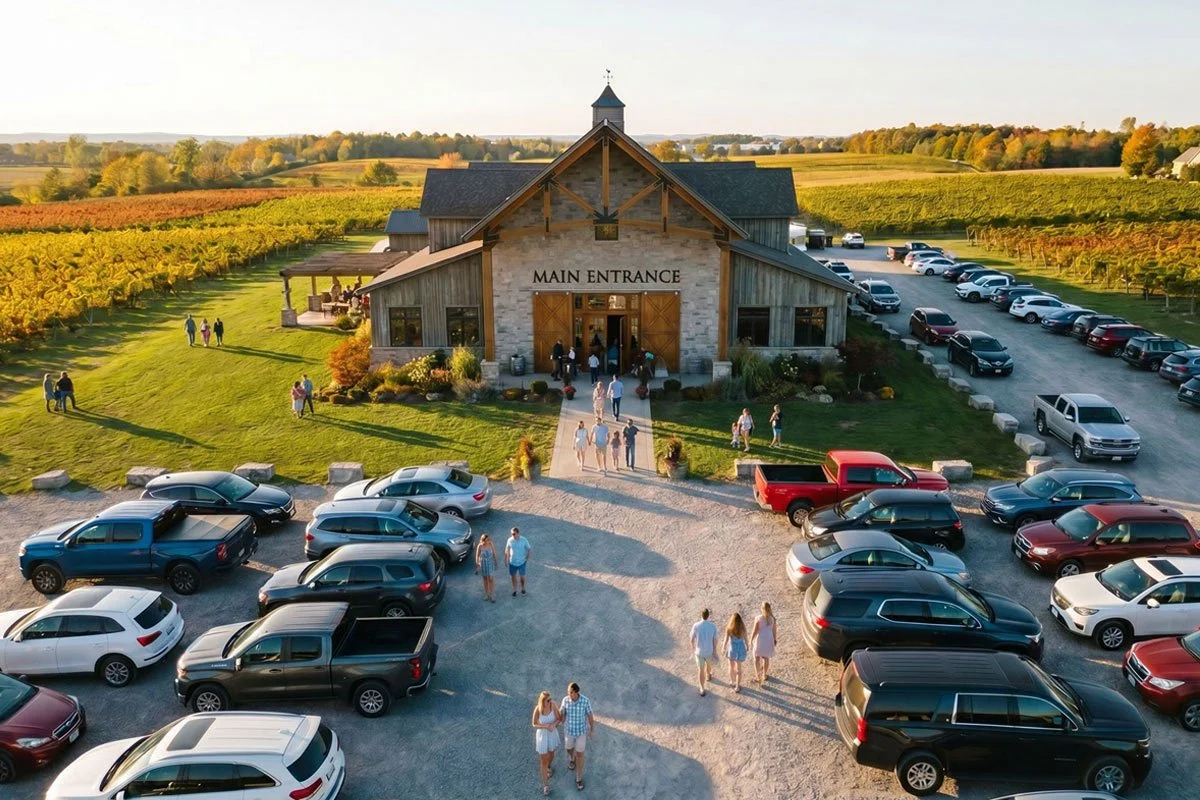
A visitor who's been to your winery once has checked you off their list. The real work is giving them a reason to come back.
A lot of winery visits are like checklist tourism — a traveler adds a region's wineries to a list, visits each one once, checks it off, and moves on. That's not disloyalty, it's just how exploratory travel works by default. Turning a one-time visit into repeatable revenue requires deliberately interrupting that pattern: building signature, non-repeatable experiences instead of generic tastings on a patio. It means creating event chains where one visit sets up a reason for the next, and treating the visit itself as the first chapter of a relationship instead of a one-time transaction.
Wineries that can do this convert tourists into returning guests. Wineries that don't are structurally competing for first-time visitors forever.
The Checklist Winery Problem
Here's what actually happens on a wine region trip (most of the time): a visitor arrives with a shortlist — five or six wineries. It’s usually built from a map, a "best of" article, an AI search, or a friend's recommendation. They visit each one, taste the flagship wines, maybe buy a bottle, take a photo, and cross it off. By the time they've done that once, the winery has, from the visitor's perspective, been experienced. There's rarely a next step implied, because nothing about the visit suggested there should be one (wine clubs don’t count).
This isn't a niche problem — it's the default behaviour of travel explorers. In fact, recent wine tourism market research specifically notes that generic experiences are increasingly being rejected by returning guests, and repeat visitation is being hampered by a lack of novelty across popular wine destinations. In other words, the industry itself is starting to notice that the standard tasting-room format — pour, describe, repeat — has a ceiling. It's good enough to earn a first visit, but it rarely gives anyone a reason for a second.
Why "Great Hospitality" Alone isn’t the Answer
The instinct that a lot of wineries have is to continually try to offer better service, a nicer tasting room, a more polished pour. All of that helps, of course, as customer service consistently shows up in research as one of the strongest predictors of return-visit intention. But it solves the wrong layer of the problem. All of those things are table stakes — the bare minimum every winery should be doing. A visitor can have a genuinely excellent experience and still never come back, simply because nothing about the visit created a reason to. Satisfaction earns a good review. It doesn't, on its own, earn a second trip.
What earns a second trip is specificity and incompleteness — the sense that this visit was the first chapter of a story they want to continue. It wasn’t a short story, but the beginning of an interesting book. That's a fundamentally different design problem than "make the tasting room nicer."
Three Ways to Break the One-and-Done Pattern
1. Build signature experiences that can't be checked off in one visit.
A generic wine-flight-and-tour can be fully "completed" in an hour or so. But a vertical tasting series that only reveals itself over several vintages, or a seasonal harvest program that's genuinely different visit to visit, or an education series that builds on itself — these types of things can't be checked off, because the format itself makes it clear that there's more ahead. The checklist mentality only works on experiences that present themselves in that way: as having completed something. Interrupt the completeness, and you interrupt the pattern.
2. Design an Event Sequence, Not One-Off Events.
Most winery events are self-contained: a single dinner, a single festival appearance, a single release party. A sequence works differently — attendance at event one earns access to, or a direct invitation into, event two, which sets up event three. It doesn't have to be complicated: a three-part seasonal tasting series tied to a single vineyard block, a "founding member" preview night that only exists for people who came to the harvest event, a producer dinner series where each course reveals what's coming at the next one. The mechanism that matters isn't the format — it's that today's visit is structurally, not just emotionally, connected to the next. And the next event is always more compelling and magnetic than today’s.
3. Treat the First Visit as the Opening of a Relationship, Not the Close of a Transaction.
This is a positioning shift more than a program shift. A lot of winery marketing treats a visit as the goal. The wineries that are getting repeat visits treat the first visit as the beginning — the follow-up communication doesn't say "thanks for coming," it says "here's what happens next," with a specific, concrete hook: an invitation to something the visitor now has access to precisely because they came once already.
For walk-in guests, the challenge becomes knowing whether it’s a first visit or a repeat – and then treating those guests appropriately. It should all be intentional, well-thought-out and then acted upon by winery employees. Getting people onto your premises is often the hard part, so why wouldn’t you do everything you can to try to engage those guests strategically and begin the process of building loyalty? Many wineries simply serve them a glass of wine on the patio and let them walk out the door, having checked that box off the list.
Why this Matters More than Most Wineries Think
The instinct to treat every visitor as a potential one-time transaction is understandable — but it caps the ceiling on what a winery can be worth per customer.
A visitor who returns two or three times over a year or two (drawn back by a genuine sense that there's always a next chapter) is worth dramatically more than three different first-time visitors who each check the box once and move on to the next stop on their list. Regions and individual wineries that have built this kind of layered, evolving experience report exactly what you'd expect — deeper attachment to the brand, stronger word of mouth, and a visitor base that returns not because they were offered a discount, but because they were given an actual reason.
The checklist mentality isn't a flaw of your visitors, it's the default outcome of an experience that presents itself as finished. The fix isn't working harder at hospitality — it's designing visits, events, and communication so that "finished" is never really a desirable option.
Read more about how you can create memorable moments for your guests. See more posts about winery marketing.
By Mike Belobradic — Winery, Tourism & Hospitality Marketing Consultant, 30 Years in Brand Strategy, WSET-Certified, Founder of Smoke Fire Grill™ and the Northern Barbecue™ method
FAQ
Why do so many winery visitors only come once?
Because most winery visits are designed to feel complete in a single stop — a tasting, a tour, maybe a purchase — which naturally produces checklist behavior on the part of travelers exploring a wine region.
Does better hospitality alone fix low repeat visitation?
Not without a strategy behind it. Strong customer service improves satisfaction and reviews, but doesn't create a structural reason for a visitor to return. Prompting return visits requires the experience itself to be designed as the beginning of something that they want to be ongoing.
What is an event sequence in winery marketing?
A sequence of experiences where attendance at one creates access to, or sets up, the next — as opposed to standalone events that each function as a complete, self-contained experience with no built-in reason to return.
Why is repeat visitation valuable enough to design for deliberately?
A returning visitor is generally worth significantly more over time than a series of one-time visitors, and tends to generate stronger word-of-mouth and brand attachment. But that outcome has to be engineered into the experience, not left to chance.