
In 15 minutes, using these prompts, you'll know exactly where you stand
Before you spend any time, effort or budget optimizing for AI search, it's important to know where you actually stand today. You can do this in 15 minutes, with no special subscriptions or tools (beyond the AI platforms themselves), and you will get a genuinely useful baseline on where you stand currently with the platforms of your choice (ChatGPT, CoPilot, Gemini, Claude, Perplexity etc.). It’s important to note whether what's being said about you is accurate, specific, and the kind of thing that would actually get someone to visit.
This works the same way whether you're auditing a single winery or a whole region, the prompts just shift in scope. I will cover both in this post.
Step 1: Run the same set of prompts across three AI platforms
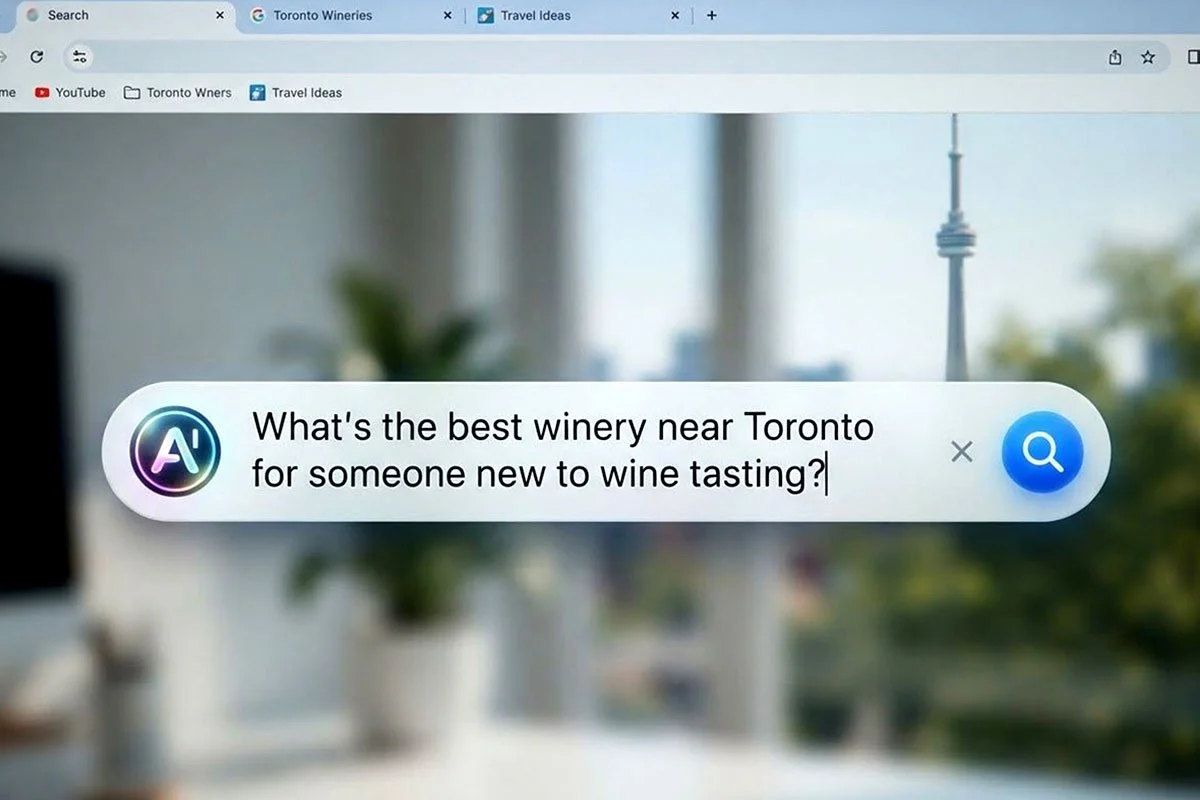
Don't just test one AI tool when you do this. Claude, CoPilot, Gemini, ChatGPT, Perplexity, and Google's Search AI Overviews all draw on different sources and weigh the information differently, so your visibility can vary meaningfully between them. Run the same handful of prompts across your favourites and compare the results. If you have specific questions you want to ask, by all means go with those. Here are a few questions you can use to get you started.
If you're auditing a single winery
Try using AI prompts like:
"What's a good winery near [your city or region] for [a specific occasion]?"
"Tell me about [your winery's name]."
"What should I know before visiting [your winery's name]?"
"What’s the best winery near [region] for someone new to wine tasting"
If you're auditing a region or tourism board
Scale the same prompts:
"What's a good wine region for a weekend trip from [nearby major city]?"
"What are the best wineries to visit in [your region]"
“Is [your region] a good option for a first wine tourism trip?"
Step 2: Score what comes back against three simple questions
For each response, look for the following three things:
1. Do you show up at all?
If a competing winery or region is named and you're not, in a search query where you'd reasonably expect to be included, that's your clearest signal of a visibility gap.
2. Is what's said about you accurate?
Outdated hours, a discontinued experience, or an incorrect description is worse than not showing up at all. That’s because it actively misleads someone deciding whether to visit, and it suggests the underlying sources feeding the model are stale or inconsistent, which ultimately reflects poorly on your business. Worse still, if someone visits based on inaccurate advice, they could leave a bad Google review out of frustration, which in turn gives the AI search a bad signal about your winery. So it can become a vicious cycle. This is why accuracy is very important for this work.
3. Is the information specific, or generic?
A response that describes you in vague, interchangeable terms ("a picturesque winery with a good selection of wines") isn't doing much work for you, even if it's technically accurate. Compare it to how a competitor is described in the same response. If theirs is more specific and yours is superficial, that's a real gap.
Step 3: Trace inaccuracies back to their likely source
If something comes back wrong, it's worth the time to figure out where the model likely found that information.
Outdated hours often trace back to an out-of-date Google Business Profile or a third-party directory that hasn't been refreshed. A missing or vague description often means your own website doesn't say much of substance on the page a model would be drawing from. Being named alongside the wrong kind of occasion — recommended for a lively group outing when you're actually built for quiet and intimate — often points to generic language on your own site not giving the model anything more specific to work with.
You won't always be able to pinpoint the exact source with certainty (because AI tools synthesize from many places at once), but even a rough sense of where the gap is likely coming from tells you where to focus first.
Step 4: Re-run the test periodically, not just once
This work is an ongoing marketing initiative. As you make the kinds of changes covered in my other posts on SEO, AEO and GEO (fixing listing consistency, adding specific scenario-based content, building third-party corroboration, etc) it's worth re-running the same prompts every few months to see whether the AI output has changed. Keep a record of what came back each time; it's the clearest way to tell whether the work is actually moving the needle.
What a Good Result Looks Like
Keep in mind that for most realistic search queries, several relevant wineries or a shortlist of regions is a normal, expected response. A good result looks like this:
you're included when you'd reasonably expect to be,
what's said about you is accurate and current, and
the description is specific enough that it actually helps someone decide you're the right fit for what they're looking for.
If you're getting all three, the deeper work described in some of my other posts is paying off. If you're not, this test just told you exactly where to start.
If the Gaps are Bigger than Expected
It's common to run this test and find more inconsistency, or a lack of your name appearing at all. Don’t panic. A lot of other wineries and regions haven't looked at their own AI visibility at all before now either, so this is genuinely new ground for many businesses. If you'd like a more structured, outside look at exactly where the gaps are and what to prioritize, that's the kind of assessment a Marketing and Brand Audit is built to provide.
See more posts about digital marketing for wineries.
Mike Belobradic is a winery and tourism marketing search expert, with 30 years of executive marketing and brand leadership experience in HNW wealth management and luxury travel. He holds WSET wine and spirits credentials, along with VQA credentials and has formal culinary training.
FAQ
How often should I re-run this test?
Every few months is reasonable. That gives the AI platforms enough time for changes to your listings and content to be found, re-indexed and reflected.
Does it matter which AI tool I test first?
Not particularly, but test at least three of the larger platforms (ChatGPT, Claude, CoPilot, Perplexity, Google AI Overviews) instead of relying on just one. They may each draw on slightly different sources (or weigh them differently) and can return meaningfully different results.
What if a competitor is named and I'm not, even though I offer something similar?
Treat it as a specific, useful signal that you can work to change. It usually points to a gap in consistency, specificity, or corroboration that's fixable, not a permanent disadvantage.
Is this test different for a region versus a single winery?
The method is identical, but the scope of the prompts changes (from a specific business to a broader destination).