
What's the Difference Between SEO, AEO, and GEO — and Why Wineries Need all Three
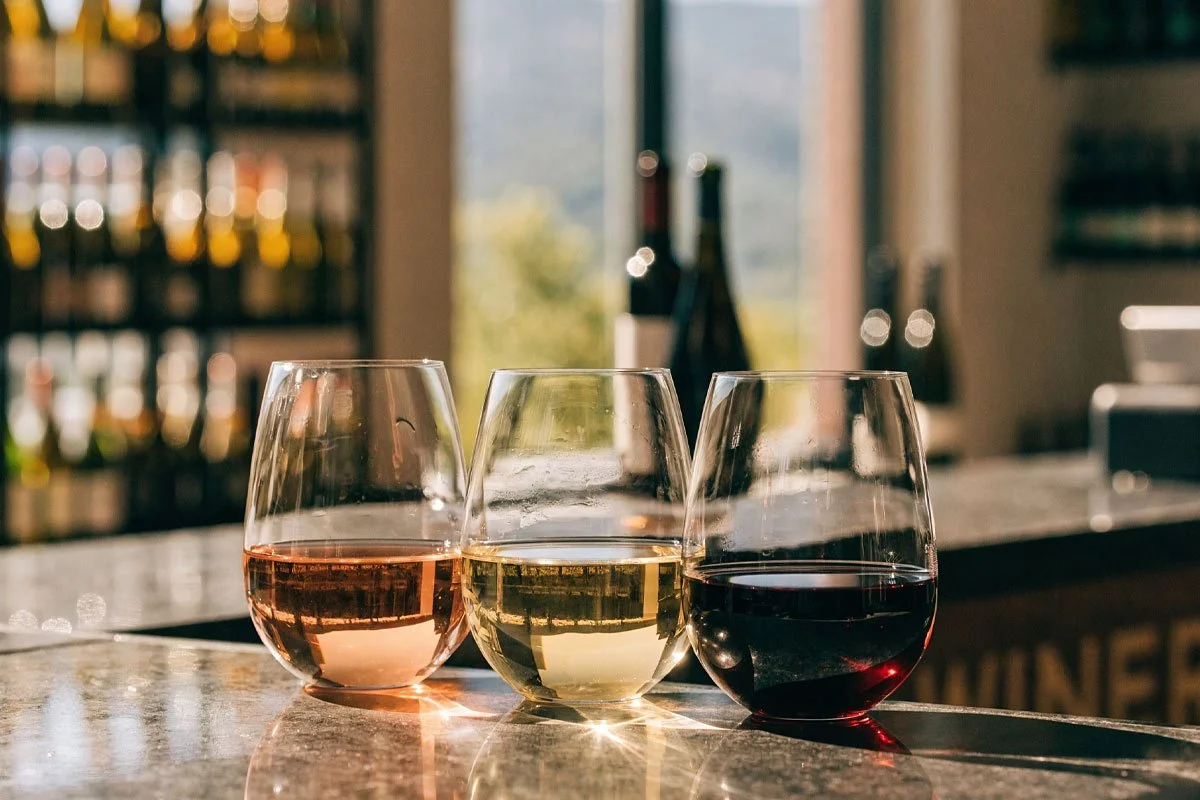
Same search, three completely different systems deciding whether you get found
SEO gets you found when someone searches for wineries near a location. AEO gets your hours and tasting details pulled directly into a voice search, or a featured snippet in search. GEO gets you recommended when someone asks an AI tool an open-ended question, like where to go for a great afternoon of wine tasting. They sound similar, but they work differently — and a winery that only understands one of them is only visible for one-third of the ways people are actually searching.
I will walk through each one in plain language, because the terminology gets thrown around loosely in some places, and loose terminology leads to wasted effort. Once you see how each system actually works, it becomes obvious why they need to be handled together, rather than as separate projects.
SEO: Optimizing for Search Engines
First of all, SEO (Search Engine Optimization) is not dead (despite what you may read elsewhere). It’s still important and it can still drive business your way.
Search Engine Optimization is the discipline that most marketers are already most familiar with. This is the practice of getting your website to rank well in traditional search results from search engines like Google, Bing, and on Google Maps.
SEO works on someone’s search intent that's already pretty specific. Someone searching for "wineries in Beamsville with a patio" or "Prince Edward County wine tours" already knows roughly what they want. Your job is to be the search result that's the most relevant, trustworthy, and best set up technically to be found.
Here’s what actually drives SEO performance for a winery:
Google Business Profile strength — completeness, recency, review volume and quality
On-page relevance — pages that speak directly to real search phrases, not just brand language
Technical health of your website — fast load times, mobile-first layout, clean site structure
Backlinks and citations — other credible sites (tourism boards, local press, wine guides) linking to you
These are foundational search considerations. They’re also table stakes, because every competitor is at least attempting to master SEO, which is exactly why SEO alone doesn't make you stand out anymore.
AEO: Optimizing for Answer Engines
Answer Engine Optimization (AEO) is newer than SEO, and a narrower discipline. AEO means structuring your content so it can be extracted and delivered directly as an answer. This mainly happens in a featured snippet below your search query, a "People also ask" box, or a spoken response from a voice assistant.
The distinguishing feature of AEO is that the person often never actually clicks through to your site. They ask "what time does [your winery] open on Saturday," and the answer engine just tells them. That sounds like a loss of a website visit, but it's actually a win at a different, earlier stage. It puts your winery’s name and the correct answer in front of someone at the exact moment they're deciding where to go. If someone is interested in more information, they’ll probably click through to your site to get it. But if you’re not found as the answer to their question, they may never visit your site (or your winery).
AEO rewards content structured like this:
A direct, plain-language answer near the top of the page, before the storytelling starts (notice how I did that in this post)
Clearly labeled FAQ sections built around the actual questions visitors ask — hours, fees, walk-ins, dog policies, food availability
Proper schema markup (FAQPage, LocalBusiness) so search machines can parse the answer, not just read the page
Short, confident, unambiguous answers — the opposite of a lot of marketing copy that’s too flowery or long
Most winery websites bury this information three clicks deep, or worse, in a PDF. That's the gap and it’s where you can win.
GEO: Optimizing for Generative Engines
Generative Engine Optimization (GEO) is the newest of the three, and it’s the one that’s arguably the most important. It's the discipline of getting your winery cited or recommended when someone asks a generative AI tool (ChatGPT, Perplexity, Claude, Gemini, CoPilot etc. and Google's AI Overviews in search) an open-ended question.
The key difference that GEO has from SEO and AEO is that the question usually isn't specific — it's someone asking for advice. "Where should I take my in-laws for a relaxed wine afternoon in Niagara-on-the-Lake." "What's a good winery for someone who doesn't know much about wine." These are requests for a recommendation, not a lookup — and generative engines are increasingly where people go to get those kinds of recommendations.
GEO doesn't reward keyword-stuffing or gaming the system. It rewards being the kind of source that an AI search model treats as credible:
Specific, concrete detail instead of vague brand adjectives
Consistency of information across your site and third-party sources (tourism boards, review sites, media articles, Google Business Profile)
Content that reads like it was written by someone with real, first-hand knowledge of the experience
A clear point of view — generic content has nothing for a model to confidently attribute or recommend
This is still open ground right now. Starting on this now can turn out to be a real advantage, not just a nice-to-have.

Why You Need all Three, Not Just Your Favourite One
It's tempting to pick the one that feels most familiar — usually SEO — and treat the other two as optional extras. But that’s a shortsighted view.
The deeper thing to consider is that SEO, AEO, and GEO aren't three separate content strategies requiring three separate efforts. They're three different systems reading some of the same content and rewarding the same underlying qualities: specific information, content structure, and genuine usefulness. A page that vaguely describes "an unforgettable tasting experience in a picturesque setting" fails at all three. A page that says exactly what the experience is, exactly what it costs, and exactly who it's for tends to perform better across all three at once.
That's good news, practically speaking. You're not building three completely different content programs. You're building one — doing it very well — and then making sure it's structured so all three systems can read it.
There are a lot of ins and outs from a marketing, brand and content strategy in order to perform well on all three, and I am proficient at all of them if you are looking for assistance in staking your place in the wide world of evolving search.
You may also like to read: SEO, AEO and GEO for Wineries - The Complete Guide to Getting Found in Search. See more posts about digital marketing for wineries.
Mike Belobradic is a winery and tourism marketing consultant with 30 years of executive marketing and brand leadership experience, including senior roles at BMO Wealth, TD Wealth and other wealth and luxury travel brands. He holds WSET wine and spirits credentials, has formal culinary training, and is a KCBS-certified barbecue judge.
FAQ
Is AEO the same thing as voice search optimization?
While they overlap, they aren't identical. AEO covers voice search along with featured snippets and other direct-answer formats across search engines. Voice search is one channel within AEO, but not the whole discipline.
Do I need separate content for SEO, AEO, and GEO?
Not necessarily different content as much as content structured differently for each. The same well-written, specific, well-structured content can generally performs across all three, but you need to optimize for each to increase your chances of appearing in the way you hope to. What changes is formatting and structure — like adding clear FAQ sections and schema — not the underlying substance.
Which is more important for a winery right now, AEO or GEO?
Both are underused in this industry, which makes both worthwhile to pursue. This is a long-haul game and the earlier you stake your claim, the better off you will be. AEO has more immediate, measurable payoff since voice and snippet searches are already high-volume. GEO is the longer-term bet, since it's where discovery behavior is heading.
Can a small winery realistically compete on GEO against bigger operations?
Yes, often more easily than on traditional SEO. GEO tends to reward genuine specificity and credibility over a marketing budget. Smaller operators with an authentic story to tell and some third-party validation across the web can do very well on AI search. The important thing is knowing what to do and how to do it.