
How Wine Regions and Tourism Boards Can Get Recommended by AI Search
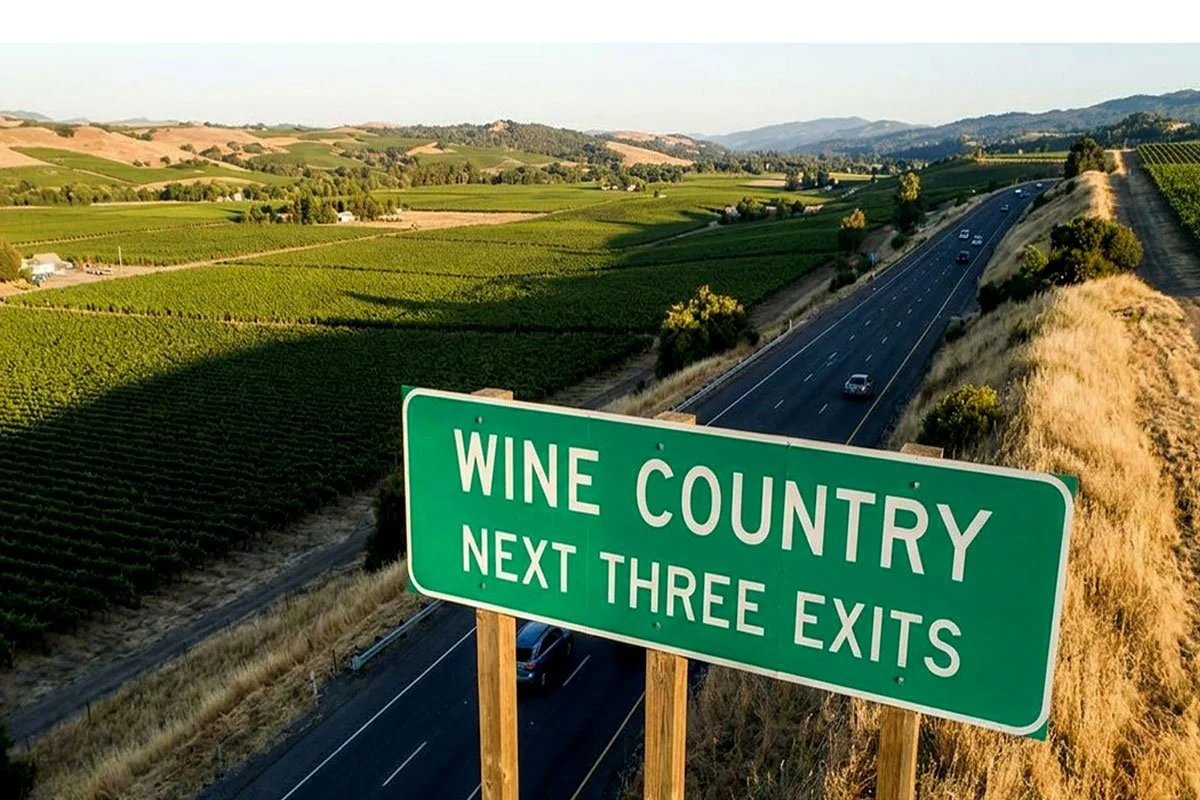
How to seed AI LLMs with the information you want to appear for your member businesses and regional story
A visitor asks an AI tool "what's a good wine region to visit near Toronto for a long weekend," and the response is a wine region or two, along with a narrative and a short list of specific stops. That's a fundamentally different search and content problem to solve for than getting one winery recommended by search (selling a region vs a winery). It’s also a challenge that many tourism boards and regional associations haven't yet mastered. If you're managing marketing for a Wine Association, a wine destination or a tourism/wine region, here's what you can actually do to get found and recommended by AI search.
Having spent decades building marketing strategies (including digital marketing and brand strategy), I have solid experience in how to ensure that an organization presents a consistent, credible story across numerous audiences. Getting a region recommended by AI search and LLMs requires a similar (but unique) approach. As a wine association or tourism board representing a wine region as a whole, it’s all about presenting a coherent and specific picture that a generative model can confidently understand.
Why this is Different than a Single Winery's GEO Work
A single winery controls its own website, its own Google Business Profile, and its own tone. A tourism board or wine region association controls almost none of that directly. Instead, it's trying to coordinate or leverage the marketing outputs of dozens of independent businesses, each with its own level of marketing sophistication, consistency, and accuracy.
That means that region-level GEO (Generative Engine Optimization, or AI search) is a content coordination and aggregation challenge. You want to make sure the wine region's own properties (website, guides, itineraries) are excellent, and pushing enough consistency across the individual member listings that the overall picture that an AI or LLM search model builds for the region is coherent and not fragmented.
Step 1: Audit what AI tools currently say about your wine or tourism region
Start the same way you would for a single winery, but scale it up. Ask ChatGPT, Perplexity, CoPilot, Claude and Google Gemini a range of realistic visitor questions:
"What's a good wine region for a weekend trip from [nearby major city]?"
"What are the best wineries to visit in [your region]"
"Is [your region] good for a first-time wine trip?"
Look for whether your region is mentioned relative to competing regions, whether the wineries named are the ones you'd want representing you, and whether the description of the region itself is accurate and appropriately specific to resonate with readers.
Step 2: Build genuinely useful itinerary and scenario content on your own digital properties
Individual wineries benefit from scenario-based content — "best for a first-time visitor," "best for a milestone celebration." At the regional level, this extends naturally into itinerary content: "a weekend in [region] for wine lovers who also enjoy great food," "a day trip through [region] for a group that’s new to wine."
This kind of content does positions your region's official website or app as the authoritative source for how to actually plan a visit. This is the kind of structured, useful, specific content that generative AI engines like to cite. Vague regional marketing copy — "a world-class wine destination" — doesn’t do that. Concrete, practical content that can be used by someone planning a visit is the kind of content that AI search likes to reference.
Step 3: Push consistency across member listings, even without direct control
You can't rewrite every member winery's website, but you can meaningfully influence consistency. To do this, add value to the wineries in your region by doing the following:
Provide members with a simple, standardized template or checklist for their Google Business Profile and core website details
Periodically audit your region's member directory against members' own sites and Google listings, and address andy discrepancies
Make sure your own regional directory is accurate, current, and detailed enough to serve as a reliable source in its own right. There’s a good chance that your site and directory may be one of the more consistently corroborated sources feeding an AI model's picture of your region
This coordination work can be a bit of a chore and it doesn't scale as fast as content creation. However, it’s critical work because it directly affects how coherent and trustworthy an AI engine views your region as it builds its responses. This level of detail is the difference between high-performing marketing and all the rest. Put in the work, see the results.
Step 4: Be specific about what makes your region distinct
Just as a single winery loses ground with generic language, a region does too. For a wine region (or any tourist region) the stakes are arguably higher, because regions are more often compared directly against each other in a single AI query. "A beautiful wine region with award-winning wineries" could describe dozens of wine regions around the globe, or the three major wine regions in Ontario, for example. What is actually distinct about your region? Is it growing conditions, your varietals, your visitor experience relative to nearby alternatives, tourist spots beyond wineries?
This is where drawing a real contrast for your region helps a lot. Working together with other regions for the greater good of the industry is one thing, but being explicit about what your region is genuinely best suited for — a quieter, more intimate alternative to a larger, more built-up wine destination, for instance — gives an AI search model something concrete to match against a specific visitor's question.
Step 5: Encourage and track third-party corroboration at the regional level
Press coverage, wine guide entries, and travel writing about the region as a whole carry real weight here, often more than any individual winery mentions. A well-placed feature in regional travel press or a strong entry in a recognized wine guide reinforces the same picture across many sources at once, which is an efficient way to operate. So bear this in mind when planning your media relations and PR strategy, especially with the digital outputs of any third-party publication or guide.
The Realistic Scope of this Work
This isn't the kind of project that a small regional wine association finishes in a quarter and then checks off the box.
The content and itinerary work on your own winery properties can move relatively quickly. The member-consistency work is ongoing and incremental — closer to an institutional relationship management approach than a single marketing campaign. Expect this to be a sustained, multi-year effort, but also expect that not every competing region is doing this work yet, which is exactly the advantage of starting now rather than waiting until it's common practice and you’re trying to catch up.
See more posts about digital marketing for the wine industry.
Mike Belobradic is a winery and tourism marketing consultant with 30 years of executive marketing and brand leadership experience in HNW wealth management and luxury travel. He holds WSET wine and spirits credentials, has formal culinary training, and is a KCBS-certified barbecue judge.
FAQ
Is regional AI search work fundamentally different than what an individual winery should be doing?
The underlying principles — specific content, consistency, credible corroboration — are the same. What differs is the scope: a region is coordinating many independent businesses and a broader narrative, whereas a winery is controlling its own site directly.
Can a small regional association realistically do this without a large budget?
Yes. Much of the highest-leverage work, like building genuine itinerary content and auditing member listing consistency, is a matter of time, knowledge and discipline and not a big marketing spend.
Should we ask individual member wineries to change their own websites?
That approach doesn’t always go over well, unless the specific request comes from the winery. However, it's reasonable to provide simple guidance or a checklist (accompanied by expert rationale as to the whys behind it) to help guide your members (but expect varying levels of adoption). Instead, focus your direct effort on your own regional properties, since that's what you fully control.
How is success measured for a region, as opposed to a single winery?
Similar metrics apply here: whether your region is mentioned appropriately in AI search responses to relevant questions, whether the wineries named alongside it reflect the experience you want represented, and whether the region's description is accurate and specific.