
If You’re Going to Serve Food at Your Winery, Consider the Guest Experience Very Carefully
Serving food at your winery is a smart idea, but how you do it can impact your core wine brand
This is a true story.
Recently we were looking for a new winery to visit. We also wanted to have some lunch while we were there, so the search began in earnest for a winery that served food.
A lot of smaller wineries don’t serve food, presumably due to the practical logistics of it all. They’re small, cottage wineries and they don’t have the staff, infrastructure or ability to sustain food services in addition to focusing on their wine business. That’s understandable, though it’s another topic worth discussing for any winery that’s inviting guests to visit the vineyard to taste and buy wine: why food service (in some way – but not any old way, as you’ll see below) is very important.
This story, however, is about what happens to your brand when food service at a winery is treated as an afterthought, especially by a larger, more well-known wine brand with a significant infrastructure in place. It’s a story of how a poor guest experience in something that is not your core business, can actually serve to weaken your core brand to the point that we left buying nothing and with a lesser view of that winery overall.
This winery is a large well-known and established label. So, we visited with the belief that they would be a good bet to have a nice patio lunch, taste their wines and likely purchase a few bottles.
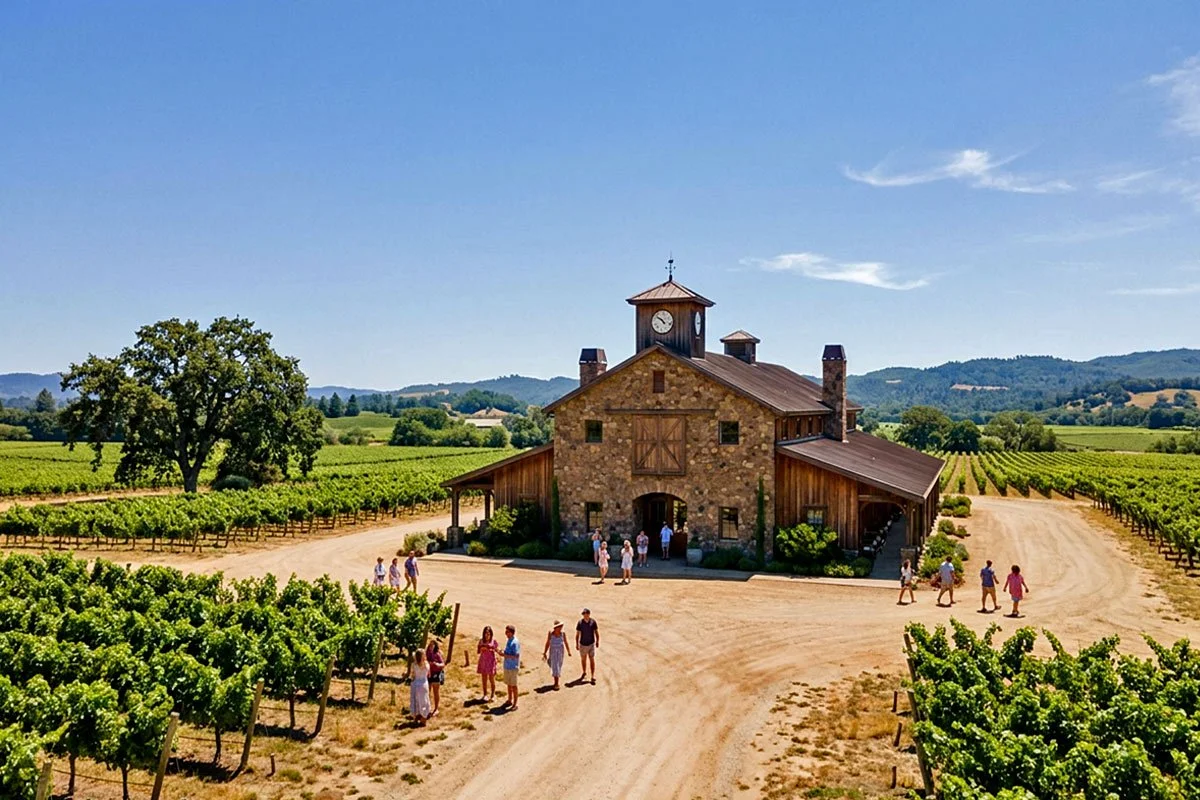
When we arrived, things looked promising. It was a beautiful sunny afternoon and we could see tables with umbrellas on a patio, usually a sign that there might be some food available in addition to wine flights.
Guest Experience Begins the Moment a Guest Arrives
On this day, the experience quickly fell apart right from the moment of first engagement. What could have been an opportunity to begin a positive guest experience turned into a negative guest experience that resulted in us leaving about 20 minutes later with no wine in hand and still searching for the elusive winery light lunch.
A greeter at a greeting station greeted us and asked if she could assist. So far, so good. We asked about a light lunch and wine tastings and she directed us to a countertop area where we could order lunch and then find a table to relax with food and wine (if we so desired). This may sound okay as you read it, but the in-person experience was more like lining up in a cafeteria line for a school lunch (complete with people jockeying for position in the line – not very appealing). This was definitely a stark contrast to the otherwise nice winery ambiance (and my view of this brand from past experience with their wines).
As we approached the counter to order, it was slightly chaotic behind the counter. That’s okay if it’s a bustling and busy day at the vineyard. Except it wasn’t very crowded. The menu, as such, was posted on a piece of paper set inside a small plastic stand on the counter beside the register. It was lean (a burger, fries etc.), which is fine, but not very descriptive. I often like the wine and cheese pairings at wineries, so I asked about something called the cheese box, which was priced at $24.00.
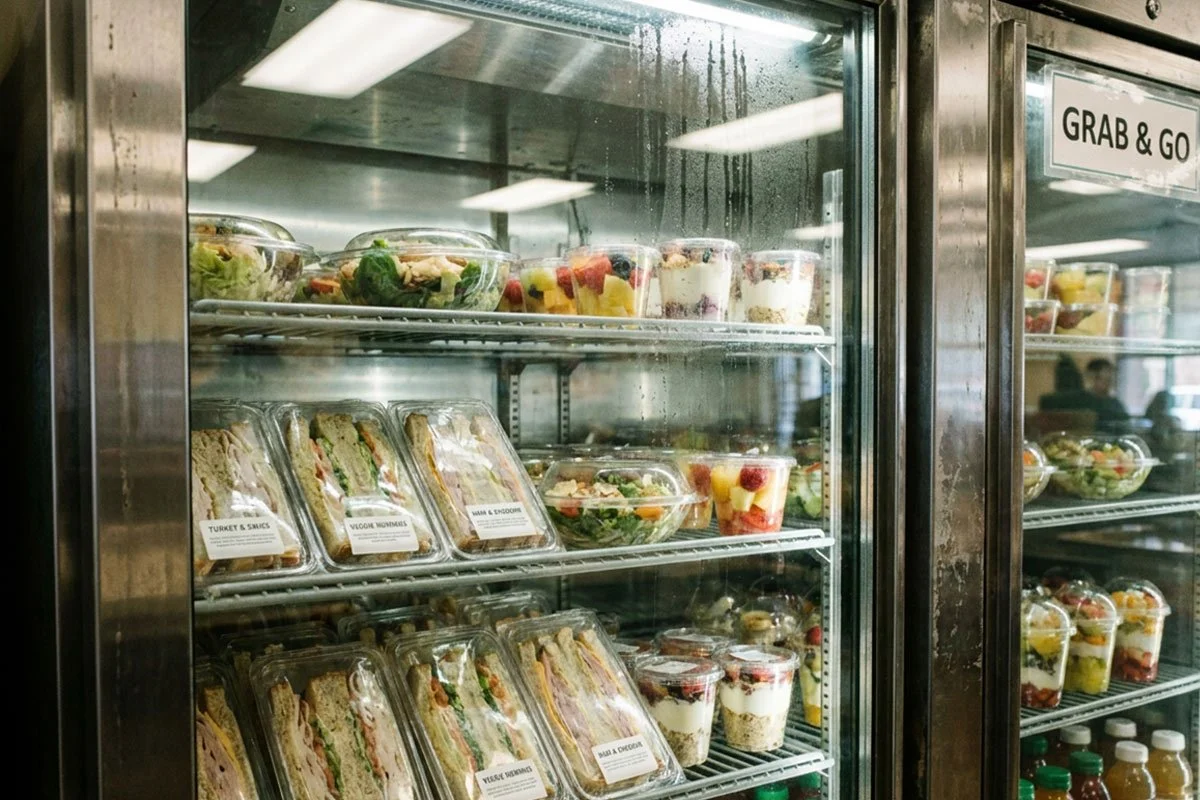
Instead of describing it, the employee beyond the counter said she could just show me the box and motioned towards as small glass front refrigerator that contained pre-packaged food, again, like you’d find in any cafeteria. This was one-step away from the sandwich machine with sandwiches in plastic shells and cellophane wrap.
She pulled out a small cellophane sealed to-go box that was maybe 9” x 6”. Inside the box it was a sad state of affairs. Maybe six or seven small chunks of random cheeses, a couple of grapes, maybe two olives and one or two other items I cannot recall at the moment. That was it. Now, I’m not a picky eater or a food snob by any means, but I do understand value, presentation, guest experience and food services – especially when comparing among many vineyards (including those in this region). For $24, showing a guest a to-go box with small random cheese chunks in cellophane wrap says a lot about this entire operation.
It’s also worth noting here that trying to decipher if the winery offered wine flights, or a wine menu, was not clear at all. Questions to the employee working the cash resulted in replies that were not exactly clear (ordering wine by the glass, versus a flight – and what, exactly, might be in that flight?). Nothing was clearly displayed at this self-serve counter. Another (arguably more critical) miss.
Once Again, it’s the Cheese that Impacts the Brand Glow
If you read my post about how a cheese experience at another winery undid their brand strategy, you’ll understand why I found it interesting that, once again, cheese became the make-or-break moment for my winery guest experience. In that other situation, the cheese was a blip in an otherwise promising unique value proposition for the winery, but it didn’t completely break our view of that vineyard or their wines. In this case, however, it did. Also, cheese boards at other wineries are $30 or $40, but they provide far more fare, they are fresh and they are presented in a fitting manner.
Serving your guests a $24 box of what look like discarded cheese chunks and a few grapes in a hospital cafeteria package is hard to believe. For this winery in particular, it’s even harder to believe because they apparently had a kitchen that was serving burgers and fries. So the missed opportunity to create an elevated (or even basic plated) non-pre-packaged cheese plate is pretty shocking. They would be far better off not to serve any of this refrigerated take-out fare at all, in my opinion as a guest. Charging $24 for this product is not a good guest experience and says everything you need to know about how the brand views itself, and its customers.
The moral of the story is that food service and wineries go hand in hand – for many reasons.
The Benefits of Serving Food at Your Winery:
There are a lot of reasons why I believe that every winery that is open to guests and offers wine tastings should offer food for sale. These include:
makes the winery a destination beyond just wine,
adds the practical ability for someone to eat something while sampling wine,
keeps the guests onsite longer and enhances your ability to sell wine,
provides more opportunity to interact with paying guests and build on your brand story,
provides an important revenue stream that can work year-round if you have indoor facilities, and
creates a true opportunity to put your wines in a positive pairing light alongside quality food.
A winery doesn’t have to become known as a fine dining destination (though some do go that route), but offering even the minimum of an elegant or even basic cheese tray that appears to be thoughtfully presented, will go a long way towards both a positive guest experience and put the winery in a more artisanal light. Wine making is a craft. It is important to maintain that approach and thoughtful intent to every guest touchpoint. When a winery overcharges for what amounts to cafeteria food to the guests visiting its physical location, it risks putting the entire value-proposition of the winery in question.
Food – or anything else that a winery provides for visitors to its home base – should always be thoughtfully designed to reinforce (if not elevate) the overall weight of the wine brand. When these value-added items become detractors to the core business, that is an avoidable problem. Worse still is that it illustrates a gap in the marketing, brand strategy and overall guest experience.
Memorable Moments Should Always Be Positive
I write a lot about creating memorable moments for guests. While the objective is positive memorable moments, the pendulum can also swing the other way. When a memorable moment is a poor customer moment, that can be very challenging to overcome. Don’t let something like a poorly-executed wine and cheese pairing be the downfall of your core brand (by offering food service at the lowest possible point of entry).
Thoughtful intent is important across the entire marketing strategy. A well-defined brand strategy and value proposition should guide everything that you do, including how you present a simple platter of cheese.
See more posts about guest experience strategy.
Mike Belobradic is a winery and tourism marketing consultant with 30 years of executive marketing and brand leadership experience, including senior roles at BMO Wealth, TD Wealth and other wealth and luxury travel brands. He holds WSET wine and spirits credentials, has formal culinary training, and is a KCBS-certified barbecue judge.
FAQ
Should every winery serve food to visitors?
Not necessarily. Many smaller, cottage wineries reasonably skip food service due to staffing and infrastructure constraints. But any winery inviting guests to visit and taste wine should think carefully about how food service, in some form, supports the visit.
Why does food service matter so much to a winery's brand?
Food extends a visit, gives guests a reason to stay longer, creates more opportunity to sell wine and build brand story, and can showcase wine in a positive pairing context — but only if it's executed with the same care as the winemaking itself.
What's the risk of getting food service wrong at a winery?
A poorly executed food offering — pre-packaged, overpriced, or thoughtlessly presented — can undermine trust in the entire brand, even when the wine itself is excellent. A weak secondary touchpoint can outweigh a strong core product in a guest's overall impression.
Does a winery need a full kitchen or fine dining program to get this right?
No. Even a simple, thoughtfully presented cheese board or platter can achieve the goal. What matters is that it feels intentional and consistent with the winery's overall brand and craft, not whether it's elaborate.